
Every morning, patients stream to this Hospital to receive care, welcomed by a serene, green environment that blends nature with modern infrastructure. Behind this calm setting, however, lies a complex challenge common to healthcare facilities worldwide: managing medical waste in a way that safeguards human health and protects the environment.
According to the World Health Organization, the global health sector contributes about 5% of total greenhouse gas emissions, amounting to 2–3 billion metric tonnes of CO₂ equivalent annually. About 15% of healthcare waste is classified as highly hazardous, while billions of injections used each year are often not safely disposed of. In Kenya, studies show hospitals generate between 0.61 and 1.03 kilograms of waste per hospital bed daily.
Against this global and national backdrop, KUTRRH has adopted a deliberate, integrated approach to sustainable waste management and energy efficiency. Central to the hospital’s strategy is behavioural change. Through simple but consistent messaging—such as posters encouraging staff, patients, and visitors to switch off lights when not in use—KUTRRH has significantly reduced unnecessary electricity consumption. According to Felix Karani, Head of Public Health at the hospital, this approach has lowered energy costs and reduced reliance on fossil-fuel-generated power, demonstrating that small daily actions can collectively yield substantial environmental benefits.
Waste management at KUTRRH is guided by strict adherence to Ministry of Health guidelines and Kenya’s Sustainable Waste Management Act of 2022. Waste segregation is conducted at the source using colour-coded bins: black for general waste, yellow for infectious waste, red for highly infectious waste, and purple for cytotoxic waste. Public Health Officer Rhoda Jepotip notes that patients and staff are actively trained to follow this system, ensuring safer and more efficient handling of hazardous materials.
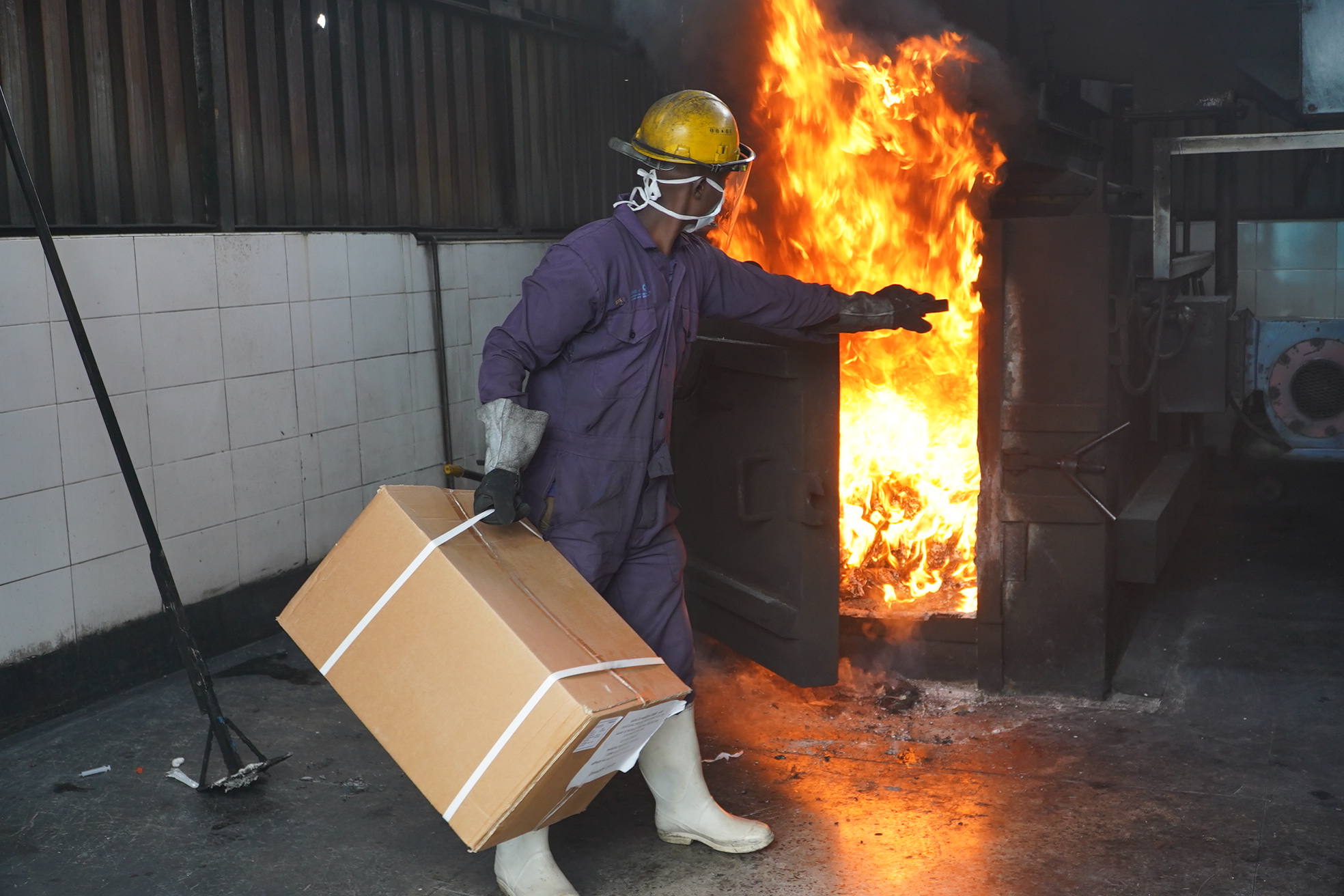
Once segregated, medical waste is treated in a modern on-site incinerator, where it is burned at high temperatures to neutralize harmful pathogens. The facility processes about 1.6 tonnes of medical waste daily, saving the hospital an estimated Ksh 48,000 per day compared to outsourcing waste disposal. The incinerator is equipped with pollution control systems, including a wet scrubber, which captures particulate matter and prevents harmful emissions from entering the atmosphere.
In a further demonstration of circular sustainability, excess heat generated during incineration is recovered and used to heat water for hospital wards. This innovation replaces fossil fuel usage in boilers, saving approximately 4,800 litres of fuel per month while reducing greenhouse gas emissions.
KUTRRH also prioritizes air quality monitoring and greening initiatives, in line with Kenya’s revised Air Quality Regulations of 2024. Tree planting and continuous air monitoring help reduce pollutants and guard against diseases linked to airborne toxins. These efforts support Kenya’s national commitment to reduce greenhouse gas emissions by 35 percent by 2035.
By aligning its operations with the Ministry of Health’s green agenda and the Sustainable Development Goals (SDGs) 3, 12, and 13, KUTRRH demonstrates that environmentally responsible healthcare not only protects the planet but also improves patient outcomes and lowers operational costs.