
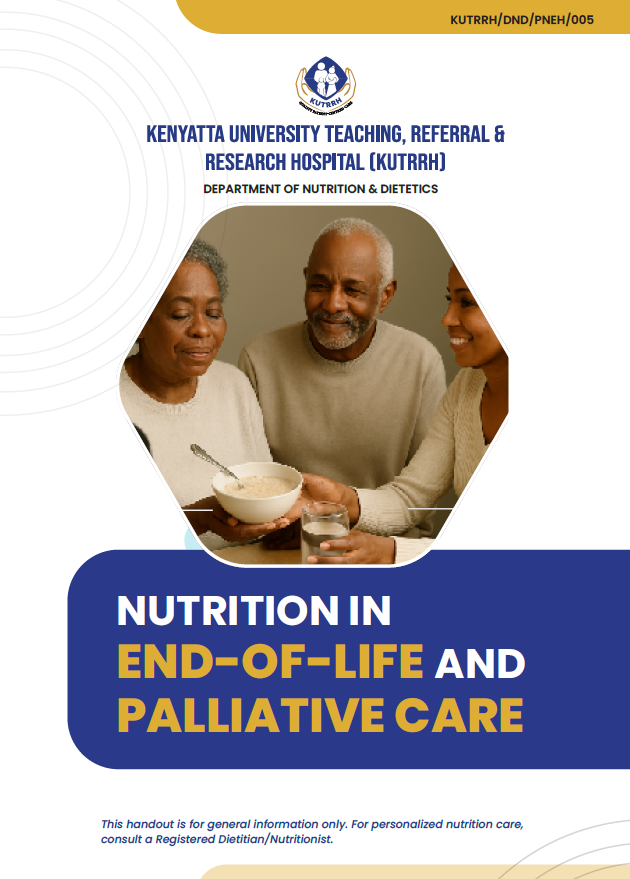
As a person nears the end of life, it is normal for appetite and thirst to decrease. This is a natural part of the body slowing down and does not mean the person is suffering or being neglected. At this stage, nutrition is no longer about cure or strength, but about comfort, dignity, and personal choice.
The focus shifts to offering small amounts of preferred foods and drinks, without pressure. Soft, easy‑to‑swallow foods and small sips of fluids may bring comfort, but forcing intake can cause distress. Not eating or drinking much is part of the natural process.
For caregivers and families, reassurance is important: less eating is expected and not harmful. What matters most is presence, gentle communication, respect for cultural and spiritual values, and supporting the patient’s comfort rather than meeting nutritional targets.